
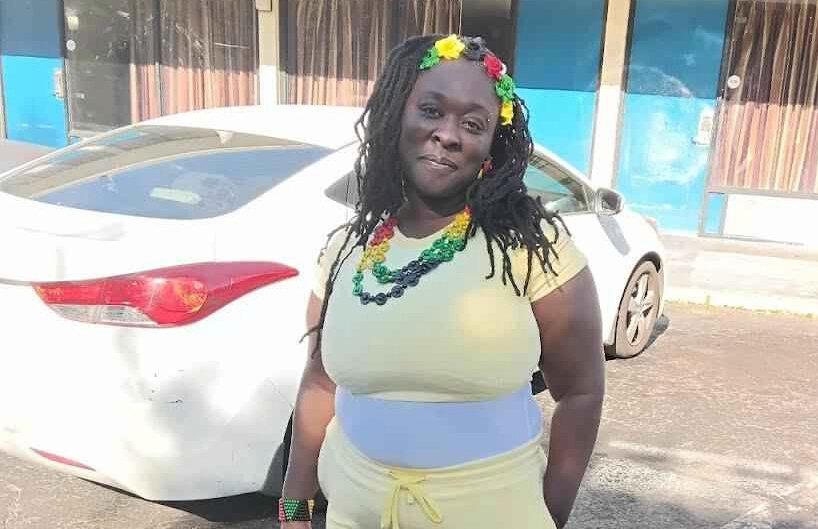
A woman who spent more than two years in prison over her disruptive behavior and comments to police during a 2020 Black Lives Matter protest in South Carolina asked the U.S. Supreme Court this week to review her case, raising questions about free speech.
A Sumter jury convicted Brittany Martin in May 2022 of breaching the peace in a high and aggravated manner for her role in the multi-day protests that broke out in South Carolina and across the nation two years earlier following the death of George Floyd, a Black man, at the hands of police in Minneapolis.
Unlike protests in Columbia and Charleston, where police fired tear gas and rubber bullets as some protesters threw rocks, fired guns, burned police cars, assaulted people and looted businesses, there were no reports of property damage or injuries in Sumter as a group of about 20 people turned out in front of the police station to demonstrate.
Still, Circuit Court Judge Kirk Griffin sentenced Martin to four years in prison, a heavier sentence than those handed down to the majority of people convicted across the Palmetto State, often for violent or destructive acts, according to a review of cases.
A question of free speech
The American Civil Liberties Union, which took on Martin’s case in 2023, argues that the hefty sentence infringes on the mother and grandmother’s First Amendment rights and chills free speech. She petitioned the nation’s highest court this week to take up her case after South Carolina’s Court of Appeals, in a procedural matter, refused to consider First Amendment arguments, ruling her lawyer had not properly raised them during the lower court trial.
Martin was released from prison on Nov. 27, 2024, after serving 2 ½ years of her 4-year sentence. The 37-year-old is living in Mt. Vernon, Illinois. She declined an interview on advice of her attorneys.
Now she and her lawyers are asking the U.S. Supreme Court to clarify that procedural rules — like the one invoked by the state Appeals Court — cannot excuse state appellate courts from “conducting the careful, independent review that the Supreme Court has long required in First Amendment cases,” the ACLU wrote in a statement.
“In 1963, the Supreme Court stepped in to protect the First Amendment rights of Black civil rights protesters who were prosecuted and convicted in South Carolina for the same offense, for doing what Brittany Martin did in 2020,” said ACLU legal director Cecillia Wang. “It’s time for the Supreme Court to reinforce the courts’ role in protecting freedom of speech.”
The landmark case Wang is referring to is Edwards v. South Carolina. In that case, police arrested about 200 students protesting segregation while they marched around the Statehouse, carrying signs and singing hymns. Prosecutors charged them with disturbing the peace.
“I am praying that this case be overturned. This is a battle to exercise and uphold our constitutional rights,” Martin said in a statement. “They’ve got to give us some justice and let us know that we still have our First Amendment right to freedom of speech in this country. My case would be the perfect example of that.”
The protest
Martin moved with her four younger children to Sumter from Iowa in spring 2020. When protests broke out in May of that year, Martin joined in. She told The Associated Press she still grieved the death of her brother-in-law, who was shot 19 times by Sumter police in 2016 after officers said he fired a gun after a stolen car chase.
As the protest stretched out over about five days, the city implemented a curfew. Police arrested Martin and eight others for what prosecutors said was disruptive behavior.
In addition to breaching the peace, Martin faced charges of inciting a riot and threatening police.
In court, prosecutors showed police body camera recordings of Martin. She is not seen touching officers with her hands but she does make statements such as: “Some of us gon’ be hurting and some of y’all gon’ be hurting” and “We ready to die for this. We tired of it. You better be ready to die for the blue. I’m ready to die for the Black.”
News photos of those demonstrations also showed Martin standing chest to chest with officers and shouting in their face.
The jury acquitted Martin of the riot charge and reached no verdict on whether she threatened officers’ lives. She was found guilty of breaching the peace, a crime that is typically a misdemeanor punishable by no more than a $500 fine and 30 days in jail. But prosecutors elevated the charge to a “high and aggravated” crime, which carries up to 10 years imprisonment.
South Carolina case law defines breach of the peace as “a violation of public order, a disturbance of the public tranquility, by any act or conduct inciting to violence.” What makes it “high and aggravated” is more open to interpretation, the South Carolina branch of the ACLU argued in court documents.
High and aggravated
The state’s most high-profile case involved an intoxicated University of Alabama football fan who punched a University of South Carolina fan, knocking him unconscious after a football game in 2010 at Williams-Brice Stadium. The man died after the driver of a vehicle unknowingly ran him over in the bumper-to-bumper traffic. A judge sentenced the Alabama fan to three years in prison with the rest of his 10-year sentence suspended.
Many bystanders in the gameday crowd witnessed the man’s disturbing death and SC Appeals Court judges ruled that the event, the distress it caused to so many, and the public upheaval that followed “exemplify the type of behavior constituting an aggravated breach of the peace.”
Prosecutors in Martin’s case argued Martin and other Black Lives Matter protesters trespassed and disrupted businesses and traffic for days along the busy street in downtown Sumter where the police station is located.
Civil rights attorney and former state Rep. Bakari Sellers unsuccessfully sought to get Martin’s sentence reduced. The judge, in his ruling, pointed to Martin’s prior criminal convictions as contributing to the length of her sentence.
According to court documents and her attorney’s files, she was convicted four times between 2008 and 2015 for shoplifting in Illinois, Georgia and South Carolina. In 2011, she was convicted for disorderly conduct and possession of a short-barreled shotgun in Wisconsin. She also had a disorderly conduct conviction in South Carolina in 2015.
In November 2020, a judge also sentenced Martin to seven years of probation for willful intent to injure and leaving a crime scene during a family dispute in Iowa, where more than a year earlier her teenage son had accused her of purposely hitting him with her SUV and driving away.
Martin had been on probation at least six times, according to court filings.
“Probation has not been a deterrent to further criminal activities for the Defendant,” Judge Griffin wrote in his order. “An active prison sentence was appropriate in this instance.”
The ACLU disagreed and attempted to appeal the case further. While Martin is now out of prison, spokesman Paul Bowers said it is still important to clear Martin’s name and prevent such sentences from happening in the future.
The group waits to hear whether the U.S. Supreme Court will take up the case.
Other cases
Beyond Martin’s, other Black Lives Matter protest-related cases in the state continue to make their way through the courts.
Most recently, two Midlands men — Brandon Jemar Pickett, 38, and Luis Rosario, 29, both of Columbia — were sentenced in federal court last month for crimes committed during protests held in Columbia.
The May 30, 2020, protest started peacefully at the Statehouse but turned violent as protesters marched to the Columbia Police Department. After some protesters started throwing things, setting fire to police cars, and in a couple cases, assaulting people, the city implemented a curfew. Police in riot gear used tear gas and an armored vehicle to push protesters away from the police station and into the Vista entertainment district. Protesters shattered windows and broke into several businesses along the way, stealing bottles of liquor.
The judge sentenced Pickett to four years in federal prison for throwing a rock at a police officer, chipping the officer’s tibia. Rosario was sentenced to a year in prison for throwing water bottles and a wooden barricade, which hit an officer in the head, requiring seven stitches.
Federal and state prosecutors have secured convictions or plea deals with about a quarter of the roughly 100 people arrested in Columbia, according to a review of court records. Meanwhile, 62 of those charged saw cases dismissed, mostly those involving curfew violations.
Sixteen cases are still pending.
All eight adults arrested and charged in Sumter pleaded guilty or were convicted for mostly minor offenses, receiving mostly fines or 30-day sentences.
And in Charleston, where people looted and burned businesses up and down King Street, 26 people have been convicted, according to the solicitor’s office, out of 82 arrests reported by police. Nearly 30 cases involving curfew violations were dismissed back in 2020. Two cases remain pending, according to court documents.
It is unclear whether the remaining arrests were ever prosecuted. Charleston police could not immediately provide a list of names to be checked against court records.
The toughest sentences, besides Martin’s, was Pickett’s and the one handed down to Shabazz Akeem Isiah Watson, of St. Stephen. He was sentenced to five years in federal prison after pleading guilty to arson for setting fires at multiple Charleston businesses.
Those in Columbia who faced charges similar to Martin’s were given a $200 fine or 30 days in prison.
Jessica Holdman writes about the economy, workforce and higher education. Before joining the SC Daily Gazette, she was a business reporter for The Post and Courier.
SC Daily Gazette is part of States Newsroom, the nation’s largest state-focused nonprofit news organization.


