
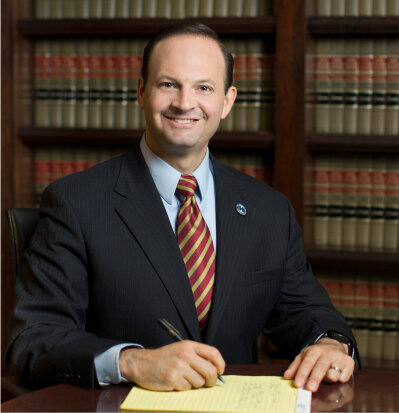
COLUMBIA – South Carolina Attorney General Alan Wilson today (Feb. 17) joined 19 other states in defending President Trump’s administration against politically-motivated lawsuits attempting to stop his team from protecting taxpayer dollars.
When the American people elected President Trump in a decisive victory, they also voted for his America First agenda. President Trump got straight to work by directing his Department of Government Efficiency employees to investigate and cut billions of dollars in federal waste, fraud, and abuse. President Trump’s political opponents are now suing to block his team from accessing federal databases with information needed to eliminate federal fraud.
“It was the Biden administration that estimated there’s between $233 billion and $521 billion in federal government waste, fraud, and abuse, and President Trump is combatting that and saving taxpayers’ money,” Attorney General Wilson said. “While that should be a bipartisan effort, the other side has filed a lawsuit to undermine the President’s authority to manage the executive branch.”
The states make the case that Article II of the Constitution grants President Trump the authority to direct executive branch agencies. The states urge the court to let President Trump’s administration continue doing its job to eliminate federal fraud and waste.
Attorney General Wilson is also actively supporting state DOGE efforts to investigate waste fraud and abuse at the state level.
South Carolina joined the Iowa-led brief, along with Alabama, Arkansas, Florida, Georgia, Idaho, Indiana, Kansas, Louisiana, Mississippi, Missouri, Montana, Nebraska, North Dakota, Ohio, Oklahoma, South Dakota, Texas, and Utah.
20 red states, including SC, back DOGE in lawsuit challenging access to Treasury system
BY: ROBIN OPSAHL - FEBRUARY 17, 2025 1:20 PM
Iowa Attorney General Brenna Bird led a group of 20 states filing a brief in support of President Donald Trump’s administration and Elon Musk amid lawsuits challenging the constitutionality of actions taken by the Department of Government Efficiency (DOGE) task force.
The brief was filed in a case brought by Democratic attorneys general challenging access by Musk and DOGE employees to personal information through the U.S. Treasury payment system. A federal judge in Southern District of New York granted a temporary restraining order in the case, blocking Musk and DOGE employees from accessing the information and destroying records already obtained.
But Bird, in the amicus brief, argues these challenges are unconstitutional, stating Trump has the authority to direct executive branch agencies under Article II of the U.S. Constitution.
“Ultimately, Plaintiffs here are upset because one set of bureaucrats in the Executive Branch have access to data that they believe only other bureaucrats in the Executive Branch should have access to,” the brief states. “This type of fiddling around with the President’s prerogatives asks this Court to insert itself into core Executive decision-making regarding policy and personnel. The President is working to combat what former President Biden’s administration identified, at minimum, as hundreds of billions of dollars in fraud.”
The lawsuit over access to personal information through the U.S. Treasury payment system is one of several brought against Trump, Musk and DOGE in the wake of recent moves that opponents say are unconstitutional. Democratic AGs have also brought a lawsuit seeking to block Musk and DOGE taking further action, stating the task force is violating federal laws that dictate how temporary organizations under the executive branch can operate.
In a news release on the court filing, Bird said these actions were wanted by the American public, as voters elected Trump in the 2024 election “to clean up Washington and cut federal waste.”
“But while President Trump fights to deliver on his promises for the American people, his political opponents are weaponizing lawsuits to stand in the way,” Bird said in a statement. “American taxpayers deserve to know where their hard-earned dollars are being spent. I am defending DOGE so that President Trump’s team has the tools needed to eliminate federal fraud and protect hundreds of billions of taxpayer dollars.”
Bird was joined by Attorneys General in Alabama, Arkansas, Florida, Georgia, Idaho, Indiana, Kansas, Louisiana, Mississippi, Missouri, Montana, Nebraska, North Dakota, Ohio, Oklahoma, South Carolina, South Dakota, Texas, and Utah filing the brief.
Like the SC Daily Gazette, Iowa Capital Dispatch is part of States Newsroom, a nonprofit news network supported by grants and a coalition of donors as a 501c(3) public charity. Iowa Capital Dispatch maintains editorial independence. Contact Editor Kathie Obradovich for questions: info@iowacapitaldispatch.com.
Robin Opsahl is an Iowa Capital Dispatch reporter covering the state Legislature and politics. They have experience covering government, elections and more at media organizations including Roll Call, the Sacramento Bee and the Wausau Daily Herald.
WHAT THE DEMOCRATIC AGs SAY:
NEW YORK – New York Attorney General Letitia James today (Feb. 7) led a coalition of 18 other attorneys general in filing a lawsuit against the Trump administration to stop the unauthorized disclosure of Americans’ private information and sensitive data. Attorney General James’ lawsuit asserts that the Trump administration illegally provided Elon Musk and the so-called “Department of Government Efficiency (DOGE)” unauthorized access to the Treasury Department’s central payment system, and therefore to Americans’ most sensitive personal information, including bank account details and Social Security numbers. This expanded access could allow Musk and his team to block federal funds to states and programs providing health care, childcare, and other critical services. With this lawsuit, Attorney General James and the coalition of attorneys general are seeking to stop the Trump administration’s new policy that illegally grants DOGE, Musk, and others access to Americans’ confidential information and the U.S. Treasury’s payment systems.
“As the richest man in the world, Elon Musk is not used to being told ‘no,’ but in our country, no one is above the law,” said Attorney General James. “President Trump does not have the power to give away Americans’ private information to anyone he chooses, and he cannot cut federal payments approved by Congress. Musk and DOGE have no authority to access Americans’ private information and some of our country’s most sensitive data. I am taking action to keep our information secure, and to prevent any unconstitutional freeze on essential funding that Americans rely on every day.”
Beginning February 2, 2025, the Trump administration’s Treasury Department adopted a new policy that grants “special government employees,” including Elon Musk and members of DOGE, access to its central payment system operated by the Bureau of Fiscal Services (BFS). This central payment system controls vital funding that millions of Americans depend on, including Social Security payments, veteran’s benefits, Medicare and Medicaid payments, and more. The payment system also controls billions of dollars that states rely on to support essential services like law enforcement, public education, and infrastructure repairs.
Access to BFS is limited by federal law to a select group of career civil servants with the appropriate security clearances. Attorney General James and the coalition assert the Treasury Department’s new policy, which expands access to BFS’s payment system, violates the law, jeopardizes Americans’ most sensitive personal information, and would allow Elon Musk and other unauthorized political appointees to access a system that could permit them to freeze federal funds with the click of a button in violation of the Constitution.
With this lawsuit, Attorney General James and the coalition of attorneys general are seeking an injunction preventing the Trump administration from continuing its new policy of expanded access to BFS’s payment system, as well as a declaration that the Treasury Department’s policy change is unlawful and unconstitutional.
Joining Attorney General James in filing the lawsuit are the attorneys general of Arizona, California, Colorado, Connecticut, Delaware, Hawaii, Illinois, Maine, Maryland, Massachusetts, Minnesota, Nevada, New Jersey, North Carolina, Oregon, Rhode Island, Vermont, and Wisconsin.
This matter is being handled by Special Counsel Andrew Amer, Special Counsel for Complex Litigation Colleen Faherty, and Special Counsel for Federal Initiatives Rabia Muqaddam, under the supervision of First Deputy Attorney General Jennifer Levy.
Federal judge turns down attempt by Democratic AGs to block Elon Musk and DOGE
BY: ASHLEY MURRAY - FEBRUARY 18, 2025 6:22 PM
WASHINGTON — Temporary special government employees working at the behest of the U.S. DOGE Service, under President Donald Trump and billionaire campaign donor Elon Musk, can continue accessing data across federal agencies, a federal judge in the District of Columbia ordered Tuesday.
U.S. District Judge Tanya Chutkan wrote that the more than a dozen state attorneys general who sued Musk, Trump and DOGE Service, did not adequately show they will “suffer imminent, irreparable harm absent a temporary restraining order,” though Chutkan noted later in the filing that the plaintiffs “raise a colorable Appointments Clause claim with serious implications.”
“Plaintiffs legitimately call into question what appears to be the unchecked authority of an unelected individual and an entity that was not created by Congress and over which it has no oversight. In these circumstances, it must be indisputable that this court acts within the bounds of its authority. Accordingly, it cannot issue a TRO, especially one as wide-ranging as Plaintiffs request, without clear evidence of imminent, irreparable harm to these Plaintiffs. The current record does not meet that standard,” Chutkan said.
Chutkan’s is the latest order in a string of lawsuits against the Trump administration — though others have blocked or limited the administration’s actions. Chutkan was named to the bench by former President Barack Obama.
Attorneys general argue Musk has ‘unchecked power’
Fourteen Democratic state attorneys general in a Feb. 13 complaint accused Musk, Trump, the U.S. DOGE Service and its associated temporary organization, of violating the Constitution when handing Musk “virtually unchecked power across the Executive branch.”
The plaintiffs later continued, “Although he occupies a role President Trump — not Congress — created and even though the Senate has never voted to confirm him, Mr. Musk has and continues to assert the powers of an ‘Officer of the United States’ under the Appointments Clause. Indeed, in many cases, he has exceeded the lawful authority of even a principal officer, or of the President himself,” according to the complaint led by New Mexico Attorney General Raúl Torrez, Arizona Attorney General Kris Mayes and Michigan Attorney General Dana Nessel.
State attorneys general from California, Connecticut, Hawaii, Maryland, Massachusetts, Minnesota, Nevada, Oregon, Rhode Island, Vermont and Washington, also joined the lawsuit.
The lawsuit is among scores of legal actions challenging the Trump administration’s firings, freezing of federal funds and numerous executive orders. A tracker published by the online forum Just Security is following 75 lawsuits since Trump’s inauguration.
Thousands of government workers have received termination notices following DOGE’s access to files across numerous federal agencies.
DOGE is shorthand for the Department of Government Efficiency, which is not actually a department. The temporary project was established by Trump via executive order with the purpose of modernizing government technology.
Trump and Musk promoted the idea of DOGE along the campaign trail, with Musk promising to cut $2 trillion in federal spending.
Musk, a prolific poster on his social media platform X, often takes credit for slashing government contracts and reducing the federal workforce.
“We spent the weekend feeding USAID into the wood chipper,” Musk posted X Feb. 3 after his DOGE representatives forced their way into computer systems at the U.S. Agency for International Development.
On Feb. 11, Trump and Musk spoke to reporters in the Oval Office for a half hour about DOGE.
“Could you mention some of the things your team has found?” Trump asked Musk.
Musk is ‘not an employee’
But following a hearing Monday, the Trump administration submitted a filing to Judge Chutkan stating that Musk “is not an employee of the U.S. DOGE Service or U.S. DOGE Service Temporary Organization.”
Joshua Fisher, director of the Office of the Administration, testified in the filing that Musk is a special government employee and a senior adviser to the president.
“Like other senior White House Advisors, Mr. Musk has no actual or formal authority to make government decisions himself. Mr. Musk can only advise the President and communicate the President’s directives,” Fisher said.
Chutkan said in her order that “Even Defendants concede there is no apparent “source of legal authority granting [DOGE] the power” to take some of the actions challenged here … Accepting Plaintiffs’ allegations as true, Defendants’ actions are thus precisely the ‘Executive abuses’ that the Appointments Clause seeks to prevent … But even a strong merits argument cannot secure a temporary restraining order at this juncture.”
Musk was the top campaign donor to Trump and Republicans during the 2024 election cycle at $288 million.
Musk owns Tesla, SpaceX, xAI, Neurolink and X, formerly known as Twitter, and is worth $379 billion, according to Bloomberg’s billionaire index cited in court filings.
As of October, Musk had more than $15 billion in U.S. government contracts across nine Cabinet departments and three independent agencies, according to a New York Times analysis.
Last updated 5:22 p.m., Feb. 18, 2025
Ashley Murray covers the nation’s capital as a senior reporter for States Newsroom. Her coverage areas include domestic policy and appropriations.
SC Daily Gazette is part of States Newsroom, the nation’s largest state-focused nonprofit news organization.


